Key Takeaways
- NLP for entrepreneurs explores communication, self-awareness and behavioural flexibility when handling business challenges.
- Asking better questions can support decision-making by revealing assumptions and missing information.
- Active listening and rapport-building can support more productive client and stakeholder discussions.
- Confidence develops through preparation, practice and managing reactions under pressure.
- Effective leadership combines communication skills with measurable goals, feedback and accountability.
- Research supporting NLP as a complete system remains limited, although several related communication practices have independent evidence.
NLP for entrepreneurs involves exploring Neuro-Linguistic Programming techniques for communication, confidence, decision-making and leadership. While some related skills have independent research support, evidence for NLP as a complete system remains limited.
Running a business in Malaysia involves more than managing finances and operations. Entrepreneurs must negotiate with suppliers, address employee concerns, explain difficult decisions and maintain customer relationships.
A misunderstood instruction can delay a project. An uncomfortable conversation can leave workplace problems unresolved. Even a promising proposal may struggle when its value is poorly communicated.
NLP offers communication and self-reflection techniques that entrepreneurs can explore in these situations, provided they distinguish practical skills from claims that lack strong scientific support.
What Is NLP for Entrepreneurs?
Neuro-Linguistic Programming (NLP) is an approach to communication and personal development that examines relationships between language, thinking patterns and behaviour.
For entrepreneurs, NLP is commonly applied to:
- Communicating with employees and customers.
- Recognising assumptions that influence decisions.
- Building rapport during negotiations.
- Managing confidence during important conversations.
- Responding constructively to disagreements.
- Communicating goals and expectations.
For example, an entrepreneur who responds defensively to employee feedback might practise asking clarifying questions before explaining their position.
This adjustment can make disagreements easier to discuss.
However, scientific evidence supporting NLP as a complete system remains limited. A 2019 systematic review of seven organisational studies reported possible benefits for some psychological outcomes. However, methodological weaknesses meant NLP’s broader benefits remained insufficiently supported.
Individual communication practices, including active listening and goal monitoring, have stronger independent research foundations.
How Can NLP Business Skills Support Entrepreneurs?
| Business Challenge | Relevant Skill | Practical Application |
| Uncertain decisions | Questioning and reframing | Examine assumptions |
| Difficult negotiations | Rapport and listening | Understand client concerns |
| Low confidence | Mental preparation | Rehearse conversations |
| Stakeholder disagreements | Perspective-taking | Clarify competing priorities |
| Employee performance issues | Coaching conversations | Discuss obstacles |
| Unclear business direction | Goal setting | Define measurable targets |
How Can NLP Improve Entrepreneurial Decision-Making?
Questioning techniques commonly included in NLP practitioner training can encourage entrepreneurs to examine assumptions, consider other perspectives and clarify outcomes. Their usefulness should be assessed independently of NLP’s broader claims.
Business owners frequently make decisions with incomplete information.
Imagine a Malaysian retail business experiencing declining sales.
The owner might assume employees are underperforming and introduce stricter targets. However, declining sales could also reflect changing customer demand, pricing or product availability.
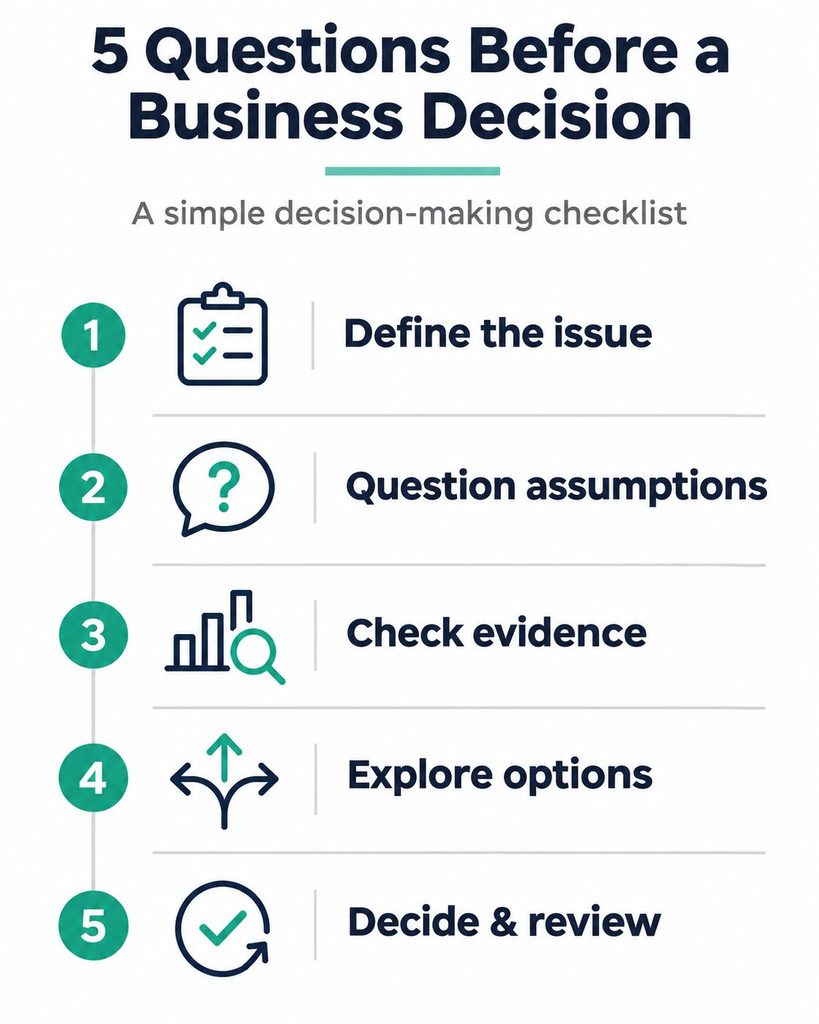
Challenge Assumptions Before Acting
Rather than accepting:
“Our sales team is not performing well.”
The entrepreneur could ask:
- Which targets are being missed?
- Is every employee affected?
- When did performance begin declining?
- What evidence supports our conclusion?
- What other factors could contribute?
These questions encourage decisions based on observable information.
Reframe Problems Into Opportunities
Reframing involves examining a situation from another perspective.
For example:
“We keep losing customers because our prices are too high.”
Could become:
“What evidence shows that price is the main reason customers are leaving?”
This encourages investigation rather than assumptions.
However, reframing should complement business data, not replace it.
Read More: How NLP Can Improve Customer Service Communication
How Can Entrepreneurs Use NLP to Communicate and Influence Others?
Entrepreneurs can communicate more persuasively by understanding other people’s priorities, listening carefully and explaining information in relevant terms. These are general communication practices rather than proven NLP-specific effects.
Influence is important when negotiating contracts, selling services or introducing workplace changes.
However, effective influence should encourage informed decisions rather than pressure people into agreeing.
Build Rapport Through Active Listening
Rapport refers to mutual understanding and connection during communication.
NLP training often introduces rapport-building techniques, including observing conversational cues and adapting communication styles.
A practical starting point is active listening.
During a client meeting, entrepreneurs can:
- Allow clients to explain their concerns.
- Ask questions to clarify expectations.
- Summarise what they have understood.
- Confirm the client’s priorities.
- Present solutions that address those priorities.
A 2022 review published in the Annual Review of Organizational Psychology and Organizational Behavior examined relationships between workplace listening and outcomes involving leadership, trust, relationships and performance.
Communicate Value From the Listener’s Perspective
Consider a Malaysian business owner presenting a digital marketing proposal.
A technical explanation might emphasise campaign platforms, tracking systems and optimisation processes.
However, a client concerned about revenue may prioritise:
- How will the campaign generate enquiries?
- What budget is required?
- How will results be measured?
- When should performance be reviewed?
Entrepreneurs should adapt their explanations to these concerns without exaggerating expected outcomes.
Effective influence begins with understanding what matters to the other person.
Can NLP Help Entrepreneurs Build Confidence?
Self-reflection, rehearsal and preparation can help entrepreneurs approach challenging conversations more confidently. However, research on these broader practices does not establish that NLP-specific exercises produce the same benefits.
Confidence matters when pitching investors, negotiating contracts or addressing employee concerns.
Recognise Unhelpful Thinking Patterns
Before a client presentation, an entrepreneur might think:
“If I make one mistake, the entire presentation will fail.”
A more constructive interpretation would be:
“I may not answer every question perfectly, but I can prepare my main points and follow up when necessary.”
This encourages a more balanced assessment of the situation.
Practise Before Important Conversations
Some NLP programmes teach visualisation and anchoring exercises intended to help participants manage their emotional state. However, evidence for these NLP-specific techniques remains limited.
Entrepreneurs can also improve their preparation by:
- Rehearsing their opening explanation.
- Anticipating difficult questions.
- Preparing supporting evidence.
- Practising a steady speaking pace.
- Reviewing their performance afterwards.
For example, an entrepreneur preparing to negotiate a supplier agreement could rehearse discussing pricing, delivery expectations and possible compromises.
The objective is better preparation, not eliminating nervousness entirely.
How Can NLP Improve Stakeholder Communication?
Perspective-taking and clear communication can help entrepreneurs consider stakeholder priorities. These practices can be used independently of NLP training.
Entrepreneurs communicate with employees, customers, investors and suppliers, each with different expectations.
Employees may prioritise manageable workloads, while investors focus on financial performance.
Understand Different Stakeholder Priorities
Imagine a Malaysian SME introducing a new inventory management system.
Different stakeholders may have different concerns:
- Employees: Will daily tasks become harder?
- Managers: How will stock accuracy improve?
- Suppliers: Will ordering procedures change?
- Business partners: Is the investment justified?
The entrepreneur should address these concerns without presenting inconsistent information.
Clarify Expectations and Responsibilities
Communication problems also occur when decisions lack clear follow-up actions.
End important discussions by confirming:
- What has been agreed?
- Who is responsible?
- What information is missing?
- When will the next update happen?
For example, after negotiating with a supplier, send a short summary confirming delivery quantities, pricing and approval responsibilities.
This can reduce misunderstandings and create accountability.
How Can Entrepreneurs Apply NLP to Team Leadership?
Communication techniques commonly included in NLP training can be used to practise clearer feedback, constructive conversations and greater awareness of employee perspectives. Their effectiveness should not be attributed to NLP alone.
As businesses grow, communication becomes more complicated. Instructions that worked with a small team may become unclear across multiple departments.
Replace Accusations With Constructive Questions
Consider an employee who repeatedly submits reports late.
A frustrated entrepreneur might respond:
“Why are you always so irresponsible?”
This focuses on the employee’s character rather than the problem.
A more constructive approach would be:
“I noticed the last two reports were submitted after the deadline. What prevented you from completing them on time?”
The employee might explain that another department has delayed providing information.
The entrepreneur can then address the underlying problem while maintaining accountability.
Use Coaching Conversations
Coaching-style questions encourage employees to participate in solving problems.
Useful examples include:
- What outcome are you trying to achieve?
- What is preventing progress?
- Which solutions have you considered?
- What support would help?
- What will you do next?
However, coaching is not suitable for every situation.
Urgent operational problems may require direct instructions, while safety concerns or serious misconduct require formal procedures.
Effective leadership means adapting communication to the circumstances.
How Can NLP Support Better Goal Setting?
Outcome-focused thinking, sometimes included in NLP training, encourages entrepreneurs to define what they want to achieve and identify the actions required to make progress.
Business goals can be difficult to achieve when they are too vague.
An entrepreneur might tell employees:
“We need to improve customer service.”
Although reasonable, the instruction does not explain what improvement means.
Turn Broad Intentions Into Measurable Goals
Consider a hypothetical Malaysian online retailer seeking faster customer responses.
The entrepreneur could establish this goal:
“Reduce average first-response time from four hours to two hours within eight weeks.”
| Goal Element | Example |
| Desired outcome | Faster customer responses |
| Current baseline | 4 hours |
| Target | 2 hours |
| Deadline | 8 weeks |
| Measurement | Average first-response time |
This represents a proposed 50% reduction in response time.
The team must then determine whether existing staffing and workflows can realistically support the target.
Monitor Progress Regularly
Goal setting should include regular performance reviews.
For the retailer, this could involve checking response-time data weekly and identifying recurring delays.
A 2016 meta-analysis published in Psychological Bulletin found that interventions encouraging progress monitoring improved goal attainment.
This supports progress monitoring as a management practice, although it does not establish that NLP itself causes the improvement.
Is NLP Training Suitable for Every Entrepreneur?
NLP training may suit entrepreneurs seeking structured communication practice, but its value depends on course content, trainer quality and learning objectives.
When NLP Training May Be Useful
Training may suit entrepreneurs who:
- Regularly negotiate with clients and business partners.
- Want to improve questioning and listening skills.
- Struggle with difficult workplace conversations.
- Prefer interactive workshops and guided feedback.
- Have specific communication behaviours they want to improve.
When Other Training May Be More Appropriate
Other programmes may provide greater value when the main challenges involve:
- Financial management and cash flow.
- Technical or industry-specific expertise.
- Project management and operational efficiency.
- Employment procedures and regulatory compliance.
- Formal sales or negotiation processes.
For example, communication training cannot resolve delivery delays caused by poor inventory management.
Before choosing a programme, entrepreneurs should assess whether it provides relevant exercises, practical feedback and opportunities to apply what they learn.
Certification alone does not guarantee improved leadership performance.
How Can Entrepreneurs Start Practising NLP Communication Skills?
Entrepreneurs can begin by focusing on one communication habit each week. These exercises are practical communication activities rather than uniquely NLP-based methods.
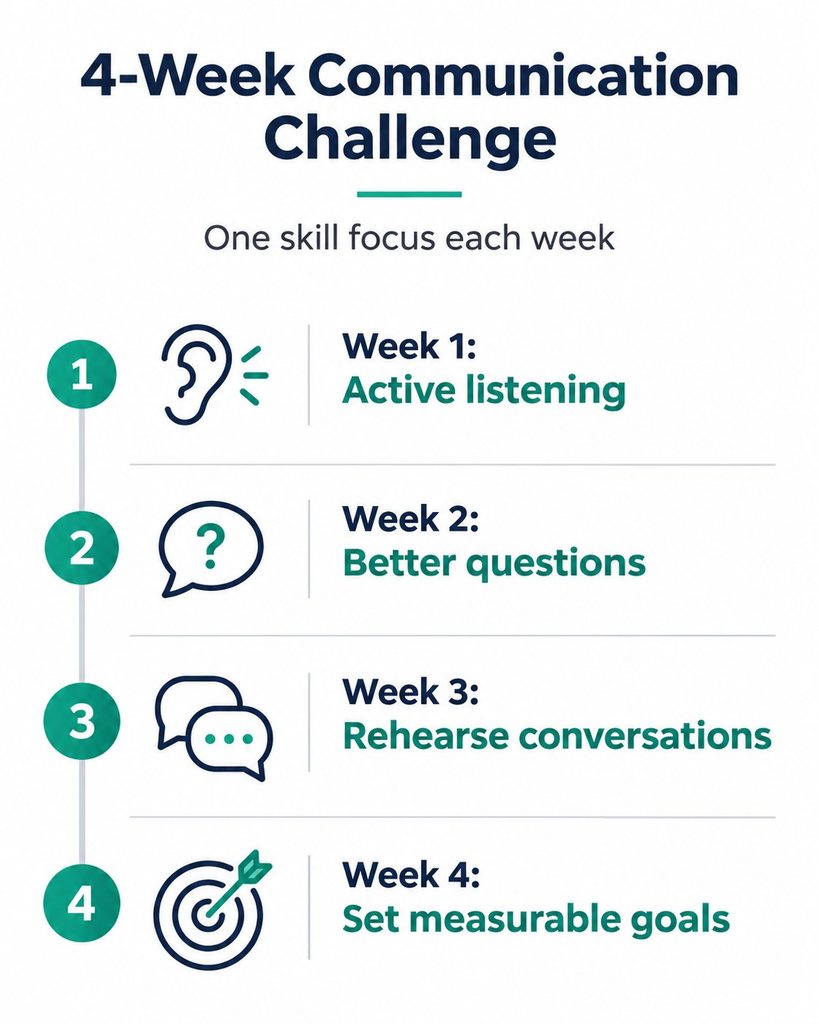
At the end of each week, reflect on three questions:
- Which communication situation was difficult?
- What did I do differently?
- What response or outcome did I observe?
The objective is to identify communication behaviours that improve clarity, understanding and follow-through.
Improving Your Communication and Leadership
NLP for entrepreneurs offers one way to explore communication, confidence and leadership behaviour. However, practical skills such as listening, questioning and goal monitoring should be distinguished from NLP’s less-established scientific claims.
By practising constructive questioning, active listening and outcome-focused conversations, Malaysian business owners can develop communication habits that support clearer decisions and stronger professional relationships.
For entrepreneurs seeking structured opportunities to strengthen these skills, The Box Training offers practical learning programmes focused on communication and personal development. Consider our NLP training services to identify techniques that complement your leadership responsibilities and business goals.
Sources
- Kotera, Y., Sheffield, D., & Van Gordon, W. (2019). The applications of neuro-linguistic programming in organizational settings: A systematic review of psychological outcomes. Human Resource Development Quarterly, 30(1), 101–116
- Kluger, A. N., & Itzchakov, G. (2022). The power of listening at work. Annual Review of Organizational Psychology and Organizational Behavior
- Harkin, B., et al. (2016). Does monitoring goal progress promote goal attainment? A meta-analysis of the experimental evidence. Psychological Bulletin
Frequently Asked Questions About NLP for Entrepreneurs
What Is NLP for Entrepreneurs?
NLP for entrepreneurs involves exploring Neuro-Linguistic Programming concepts in communication, self-awareness and leadership situations. Common applications include questioning techniques, rapport-building, reframing and goal setting.
Can NLP Help Business Owners Communicate Better?
NLP training offers opportunities to practise communication techniques. Skills such as active listening, clearer questioning and constructive feedback have practical workplace applications, although evidence supporting NLP as a complete system remains limited.
Is NLP Useful for Small Business Owners?
Small business owners may find communication exercises useful when dealing with employees, customers and suppliers. Their value depends on the entrepreneur’s specific challenges and responsibilities, rather than NLP training alone.
Can NLP Improve Negotiation Skills?
Listening and perspective-taking techniques included in some NLP programmes may help entrepreneurs understand another party’s concerns. However, successful negotiation also requires preparation, commercial knowledge and realistic proposals. NLP-specific benefits have not been firmly established.
Do Entrepreneurs Need NLP Certification?
No. Entrepreneurs can improve communication and leadership skills without NLP certification. Certification may be relevant for those seeking structured NLP training or coaching-related qualifications, but it does not guarantee better business performance.
How Long Does It Take to Improve Communication Skills?
Improvement depends on existing abilities, practice frequency and feedback. Entrepreneurs can begin applying individual techniques immediately, but lasting behavioural changes require consistent practice and review.